
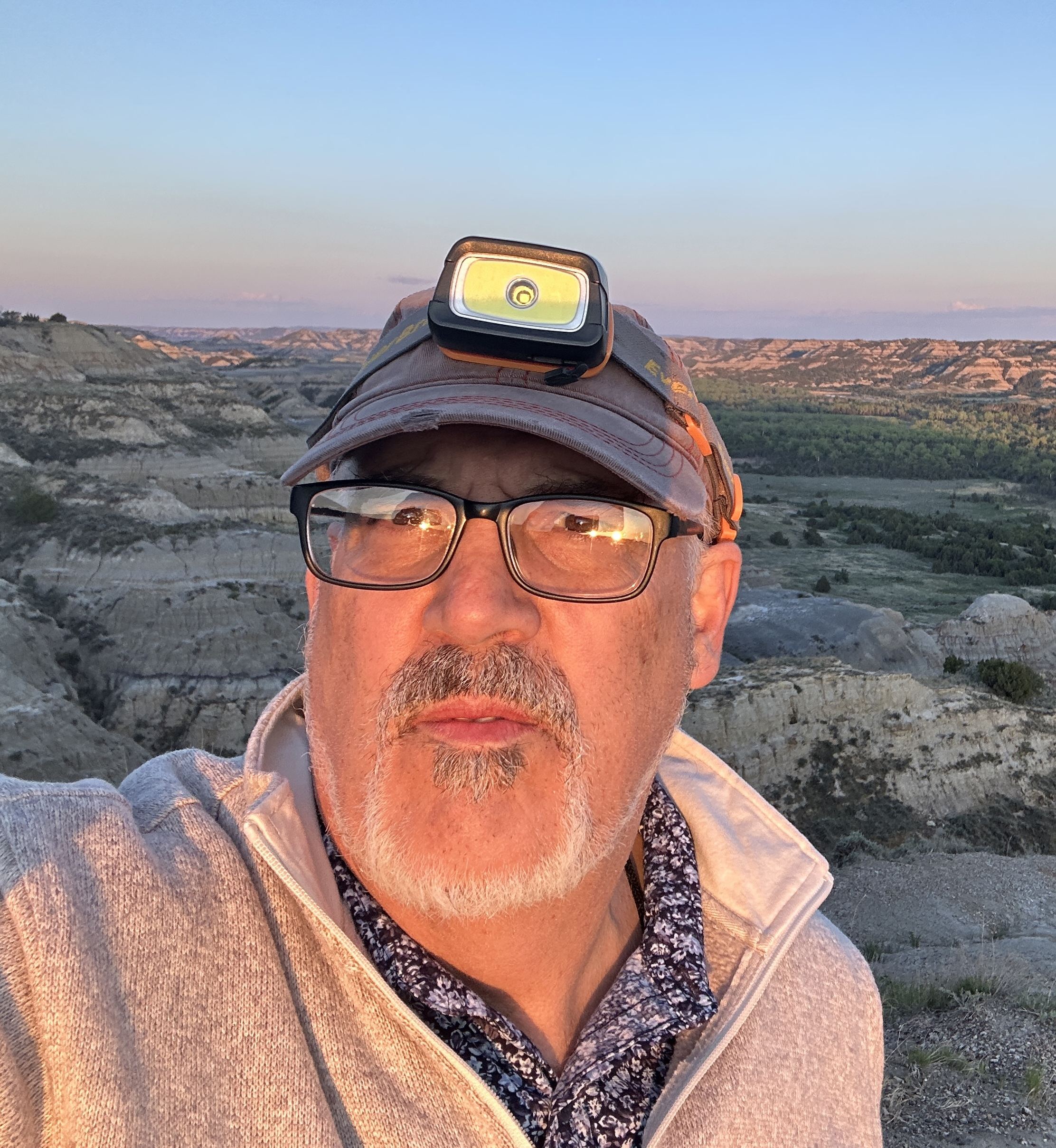
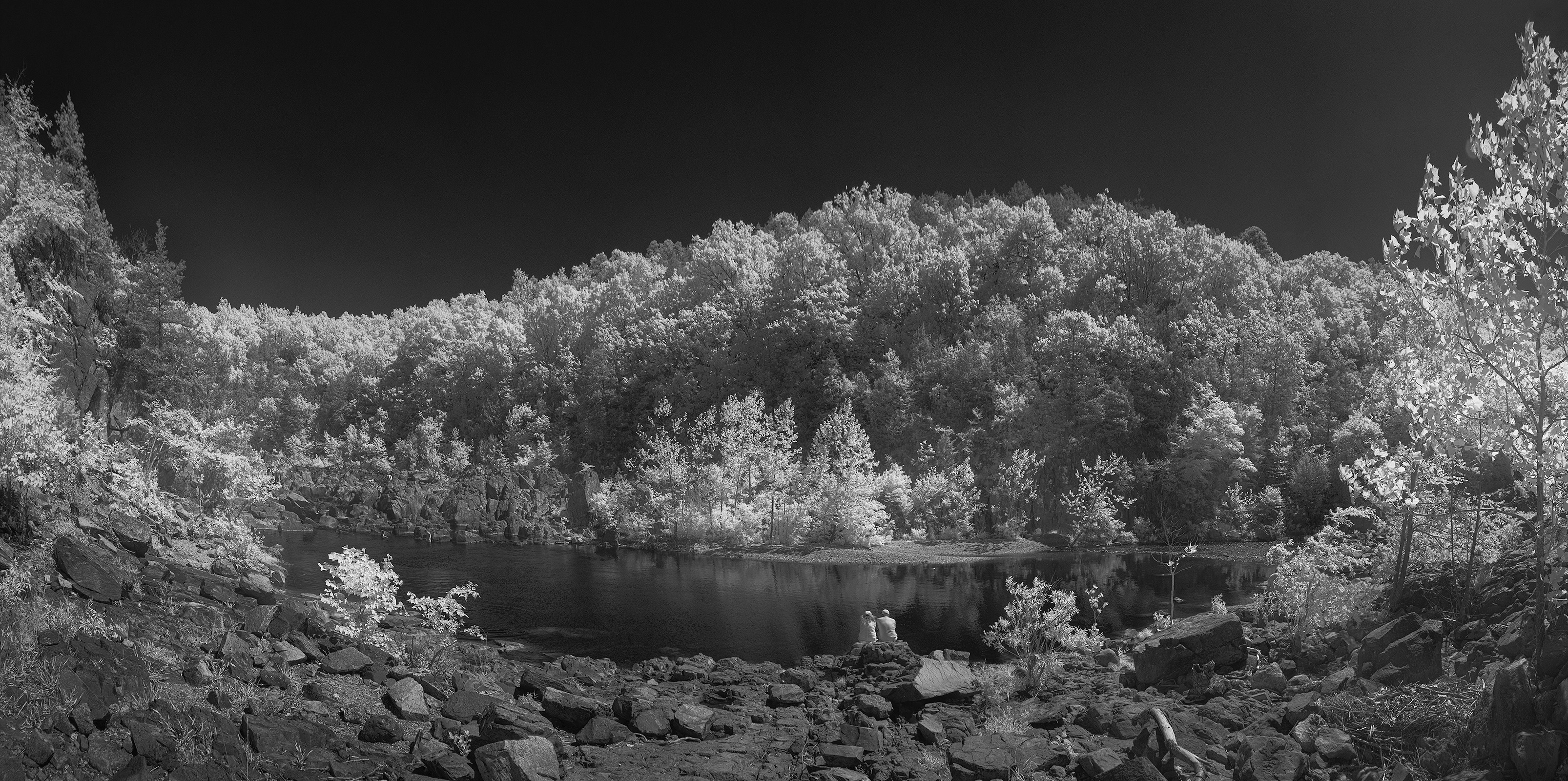
Spring is here and I just received a new 850nm clip in filter from Kolari that I’m using on my full spectrum converted R8 (conversion was done by Spencer’s Camera). I have the 720nm and IR Chrome which are both fantastic filters, but I wanted to take the effect a little further. So, this spring I will be shooting only the 850nm and I will be shooting St. Louis City parks and other state parks in and around St. Louis. Follow this project on my website or Flicker.
So why spring? You can shoot infrared (IR) all year, but I find spring is my favorite time of the year because the new growth seems to be just a little extra reflective. We also have a little more angular light than in the summer which helps in forming more interesting shadows. In summer you can shoot later in the day for angular light, but IR is best in the middle of the day when the sun light is strongest.
My first shoot with this filter was a trip down to Johnson Shut-ins in southeast Missouri. This is a well-known swimming hole and natural water feature that is immensely interesting, but I have always found it hard to capture. The challenge to get great views requires going into fast moving currents or deep pools with your gear. I choose not to drown my camera and shoot from the shallows or shoreline.
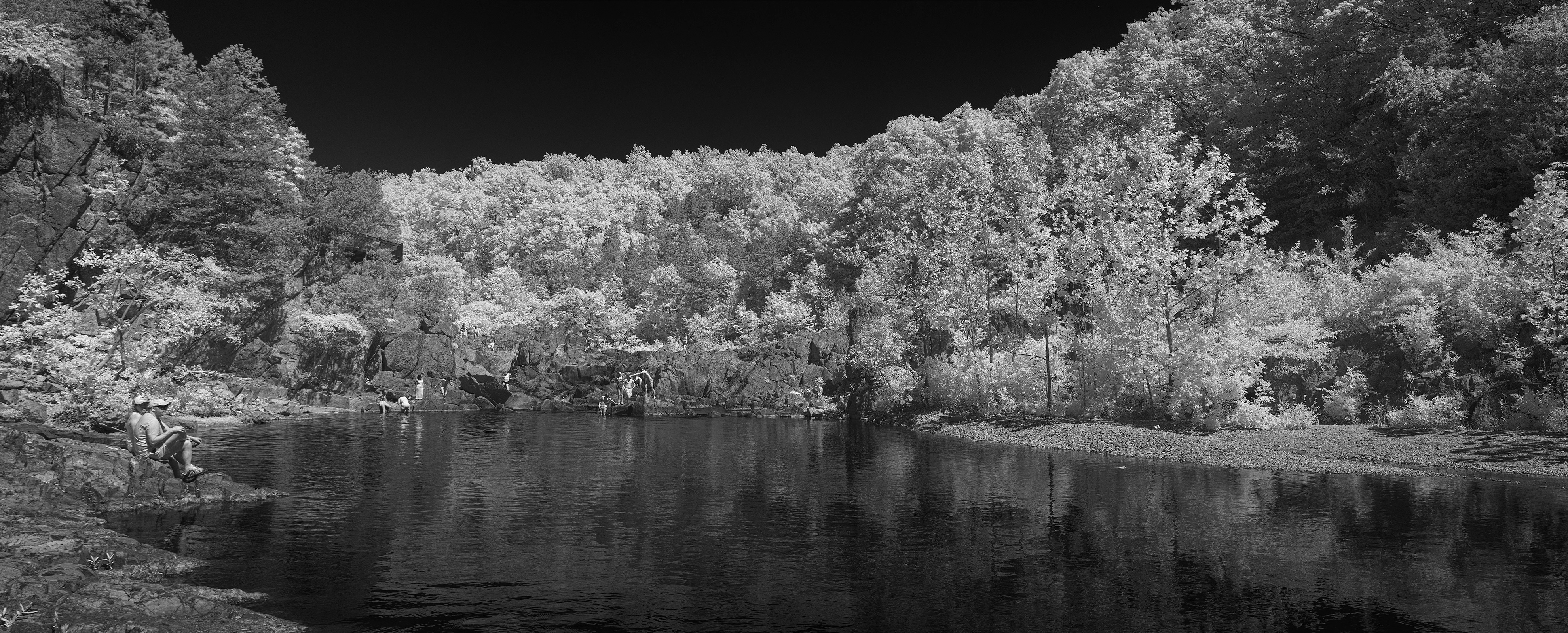
The Shut-Ins lends itself to the panoramic (pano) format.Its features, being long and part of a river system that stretch wider than they are tall, call for this style of photography. I do a multiple shot stitch method for most of my pano shots. This adds complexity and time to both the shooting and post-production, but when I get a great image, I have a very large file allowing for large prints. Often my files are pushing 500GBs.

As always, when I’m out shooting landscapes I not only focus on the large vistas, but I also look for small vignettes and even macro shots. On this day I didn’t find any macro that caught my eye, but I really liked how this small leaf was nestled in the larger one. Being in the shade diminished the IR effect but was still worth a shot.
Missing photo - coming soon
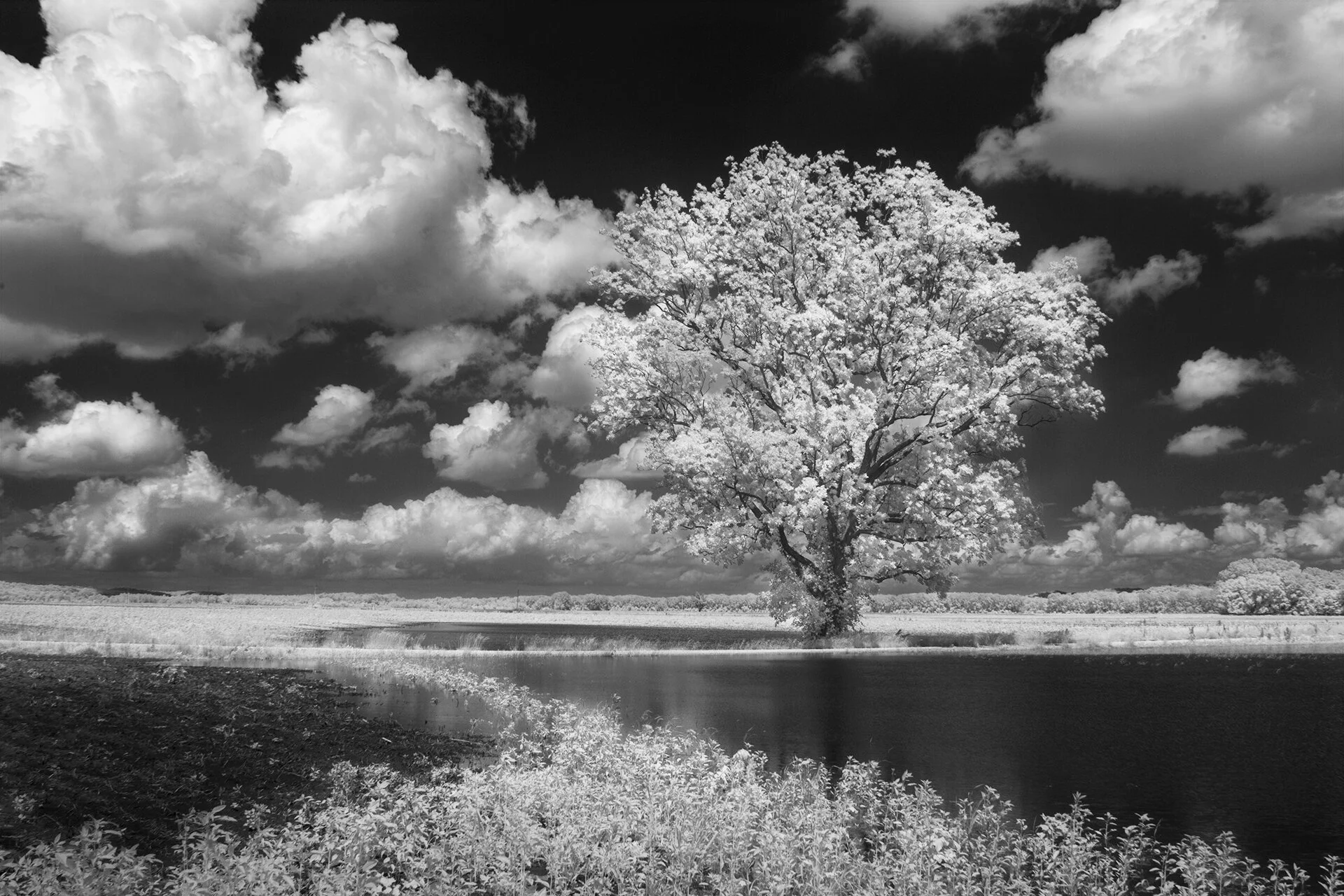
Finding a lone tree on a dark background just works so well with IR. This shot I have the water as a background, but often I try to find alone tree against the sky. A clear blue sky or with clouds can both work well.

This shot bellow was not shot with an 850nm filter but with an 720nm. I wanted to show what I mean about the lone tree.
My next weekend adventure I headed to Forest Park with our OM Systems Joe Howard (who kept insisting I switch to the OM System, which are great cameras, but I will be sticking to my Canon system if for no other reason than I have too much invested in Canon glass). We have gone out and shot before. When he worked at Schillers we would go out and do astrophotography all the time. Great shooter, check out his work on Instagram under waterfalljoe. And of course, he had to photo bomb my pano of the band stand at the Muny.
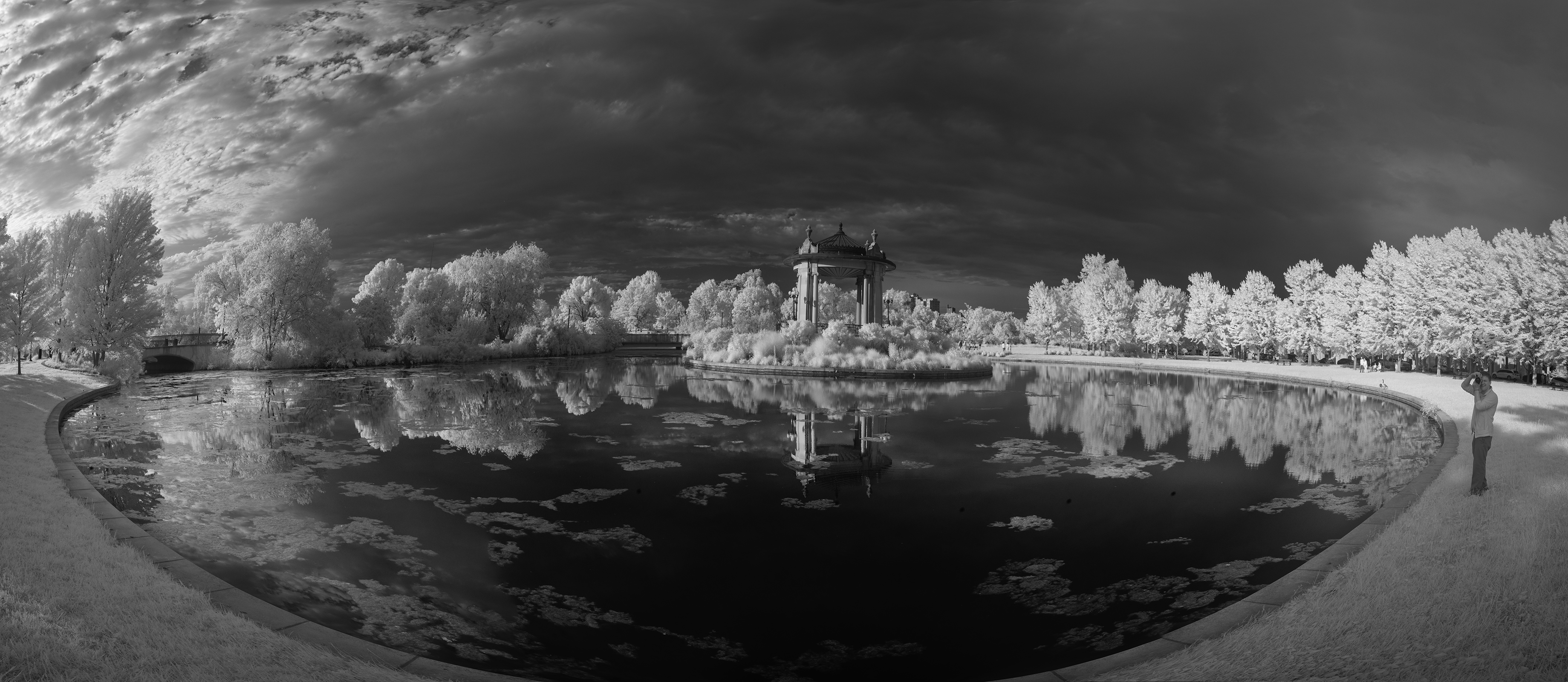
I had a little fun with this shot in post-production to give in a fisheye effect. Normally I try to keep my panos looking like a normal perspective, but I really wanted to highlight the bandstand.
The bellow shot of the bandstand I love because of the clouds and balance of the shot. With most landscape or architecture photography we want interesting clouds, which we had this day. With IR, a clear blue sky also works well as in the shots from Johnson Shut-Ins because you get such a dark, black sky against the super white contrast you get with tree leaves and grasses. This is yet another reason I’m drawn to IR. You don’t always need“perfect” conditions to get dynamic shots.

In every photo I have shown there has been water features in them. This shot of the statue of St. Francis outside the Jewel Box really highlights how well water works with IR. Like a blue sky you can get super dark blacks and when you get reflections of trees and grasses they really “POP”.
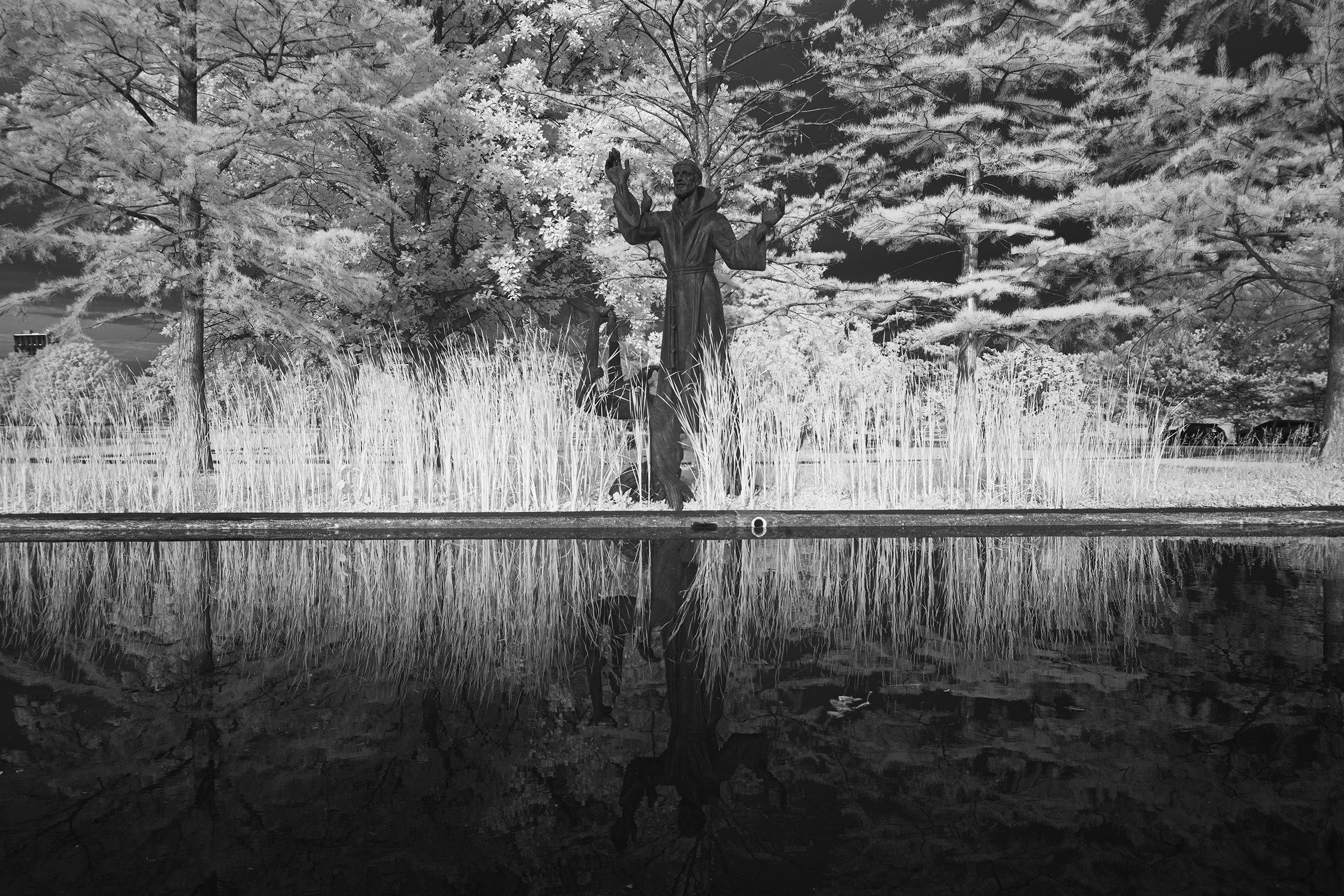
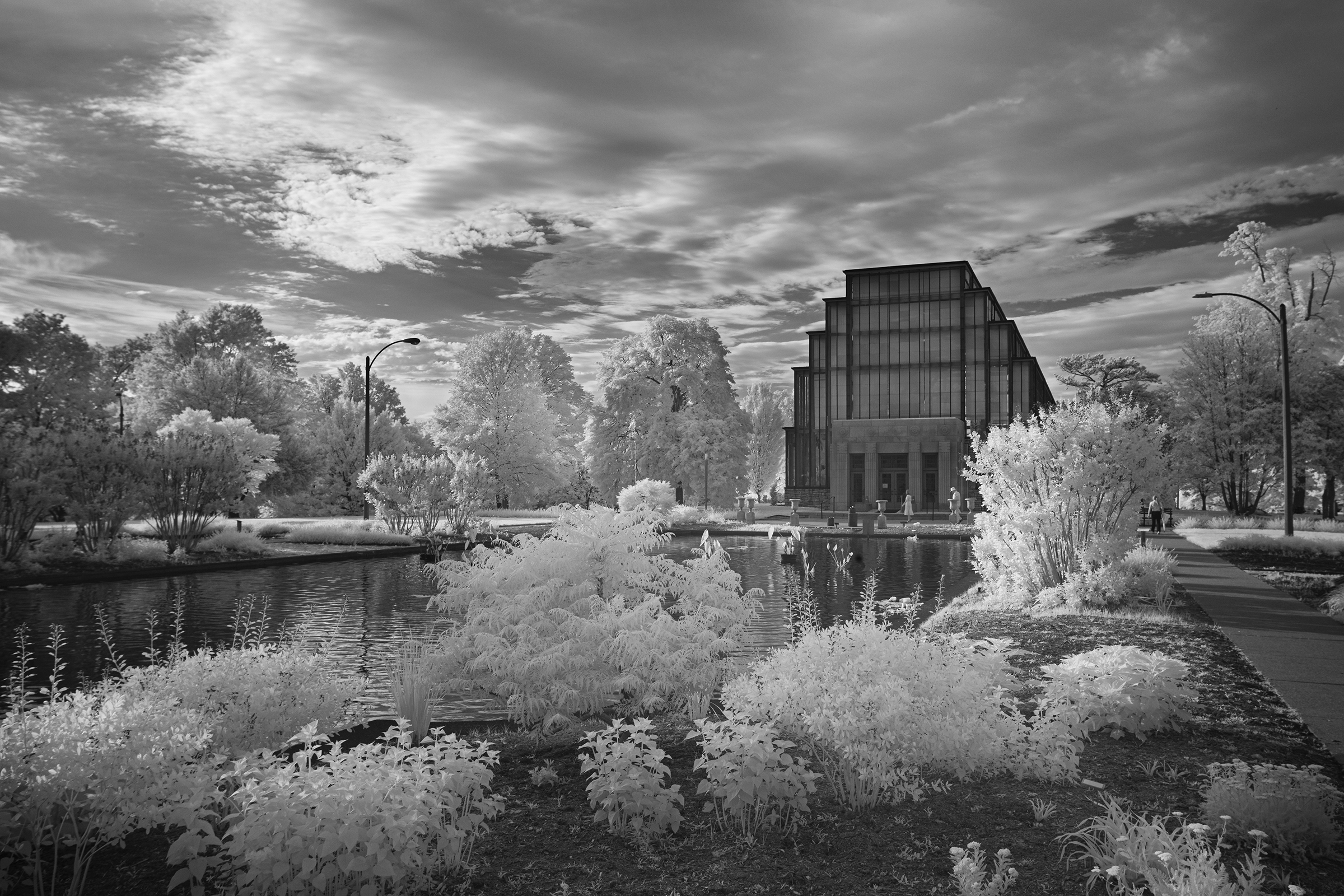
One last compositional principle I would like to point out, and that I have been working on, is building depth in my photos. Often, I see shots where there is the subject and then whatever is behind it. Where this can work, which I believe it does in the above shot of St. Francis, I feel it often lacks in creating a compelling and engaging image. This last shot of the Jewel Box I purposely included some bushes in the foreground. Often you will see similar shots of the Jewel Box but centered and with the pond in the foreground,which is a fine shot. But I always try to find an interesting alternative to the same shot we have all seen a thousand times. Here, the Jewel Box is still the subject, but it’s more subtle, and this I believe allows the viewer to not only enjoy the subject, but also explore the whole image, not just the main subject.
My next blog will go into the physics and consideration of shooting IR. Such things as focusing, what makes a good subject, and why. And using IR when shooting people. I will also go into detail about my current setup and the difference of shooting digital IR to film IR.