
This is the second blog on shooting with the 850nm filter on my modified R8 to capture black and white infrared (IR) images. In this blog I will talk about a few more shots, go over a little of the processing, and share some photos. The first blog, if you haven’t read it, is worth reading before you dive into this blog as it covers the set up. Here is the link:
https://schillers.com/blog/an-infrared-spring-through-an-850nm-filter
I continue shooting in two more St. Louis parks and I included some images from my Train Spotting series where I’m checking out locations to photograph the 4014 Big Boy steam engine coming through in July.
We start off in Carondelet Park. This is my neighborhood park and I know it well. I like this park a lot due to its water features and not being overly developed. This park was kept how the land was before westerners immigrated here with sink holes and lots of old growth trees.

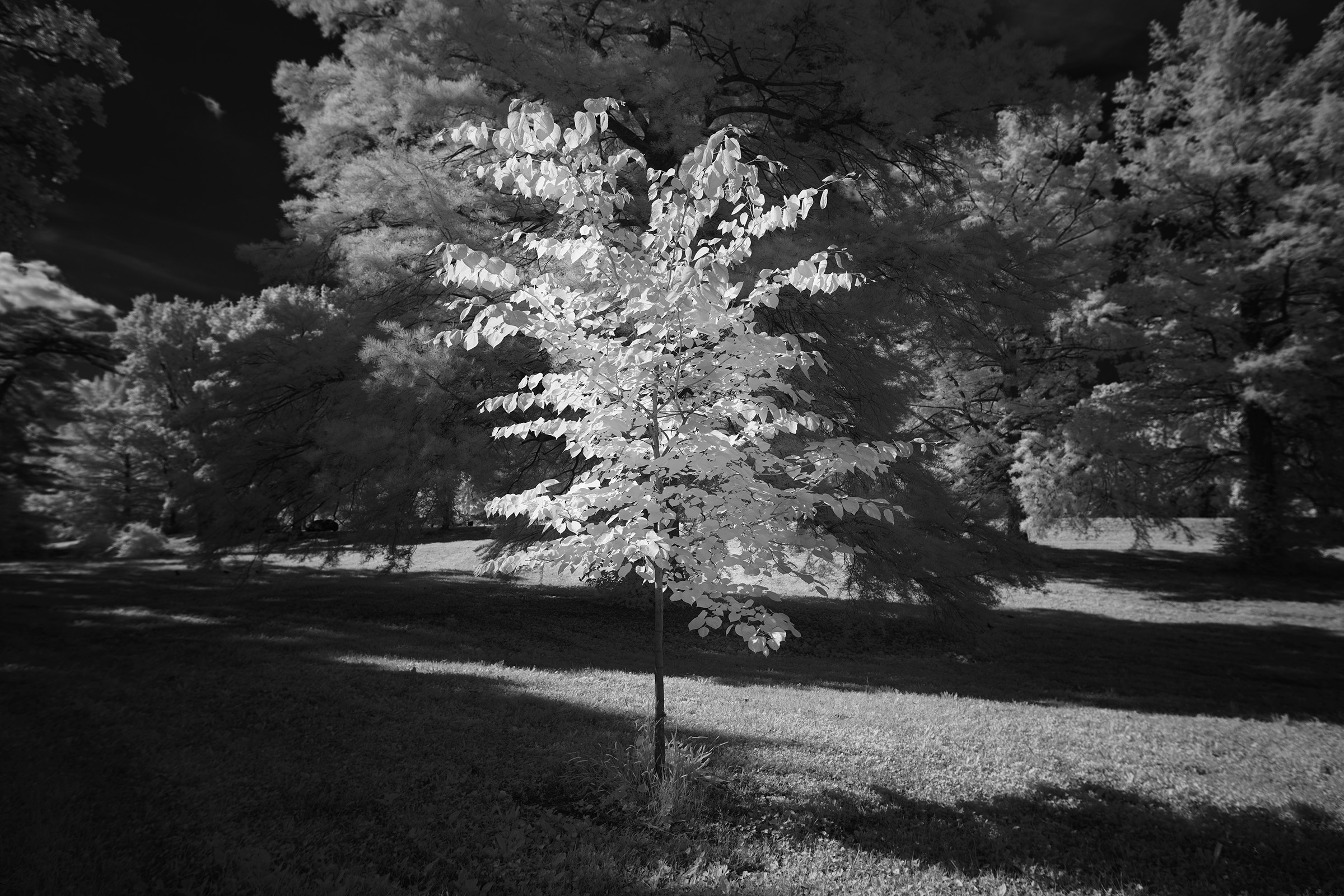
This bridge divides one of the ponds into two separate water features. Everything is working here from the direct lighting on the bridge and water grass, with trees behind, to the black water and sky. Below is the same pond at a different angle where I composed the one tree, so it stood out from the forest.


Every time I come to this park this tree calls out to me. It’s a combination of living tree with lots of dead branch’s half covered in ivy. It’s like this tree is the embodiment of how St. Louis is right now. Fighting to live as everything conspires against it.

This shows a sink hole still in the park. I believe there are three or four in this park, but it is a great place to check out and see how most of St. Louis was before the land was flattened for homes, farms, and eventually, industry.
Shooting and processing with a modified camera and IR filter isn’t hard, but there are a few steps that make life easier. First is to set up a custom white balance. Most cameras can do this. On the R8 it’s as simple as switching to custom white balance, taking a photo of a grey card and setting it. If you get your camera modified to shoot only in IR you can get the white balance set and you can send your lens in, and most places will calibrate so you can still use auto focus. Because I have a full spectrum modification and shoot Milky Way as with a hot mirror (normal color photography filter) I must manually focus, but with focus peaking it is easy.
I shoot in RAW so I must process the files, and you will want to do this as well to get the most out of you images. I use Lightroom to process initially with little corrections. Then I work in Photoshop to convert to B&W and make them pop. To convert to B&W I use the adjustment layer. There are a few ways to convert a color image to B&W but I find this is by far the best. What I love is when you open this adjustment layer you can adjust each of the primary and secondary colors. When processing a normal color to B&W I can adjust the red, yellow, blue… so I can emulate shooting B&W film with a color filter to add contrast and highlight subjects. For my IR shots I usually just play with the blue channel. The other major adjustment I do is to tweak the contrast. IR black is known for its contrast, and I shoot with a flat profile (to get as much info without blowing out the highlights) so I bring it to perfection in post just like I would do back in the day when printing on silver gelatin paper.
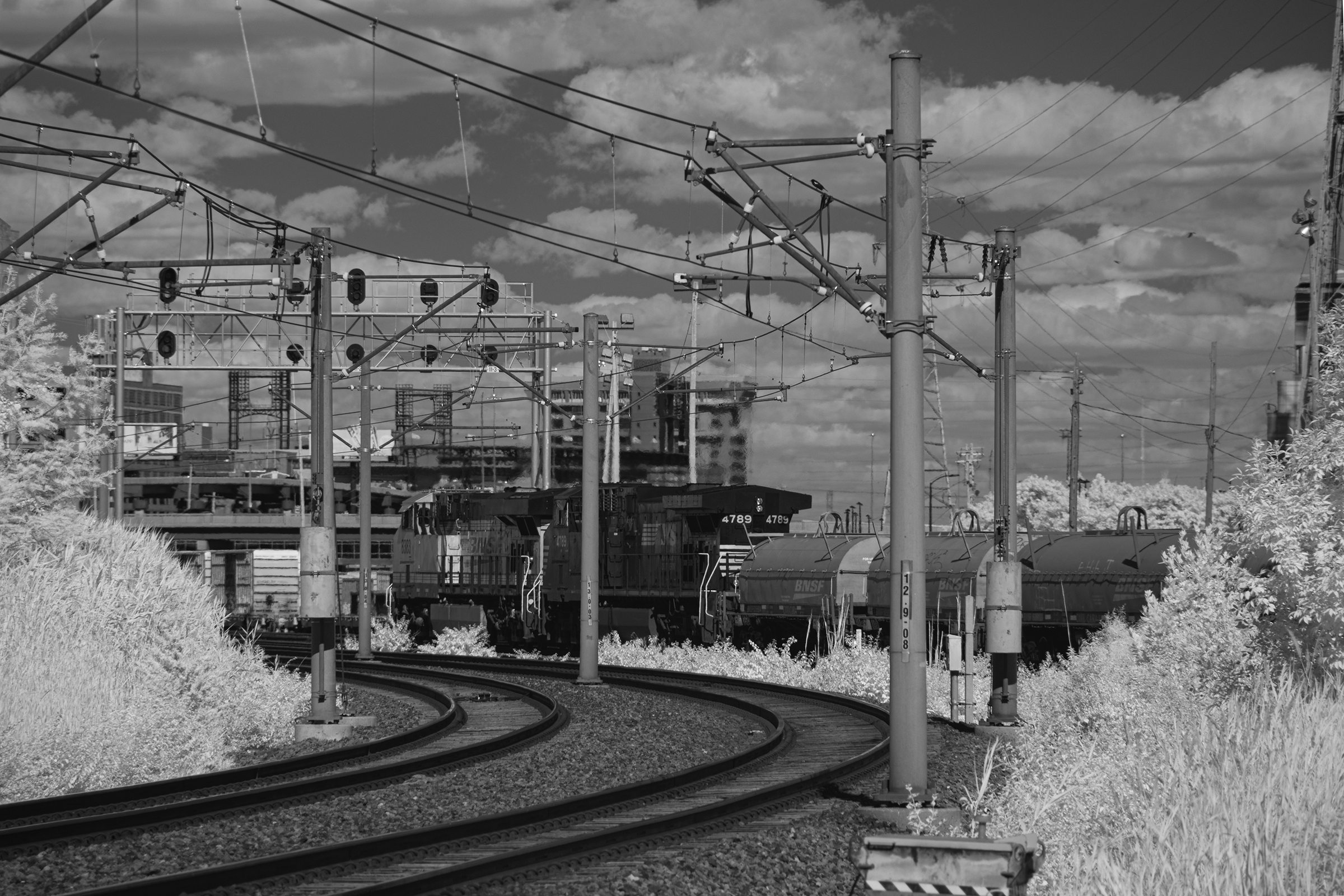
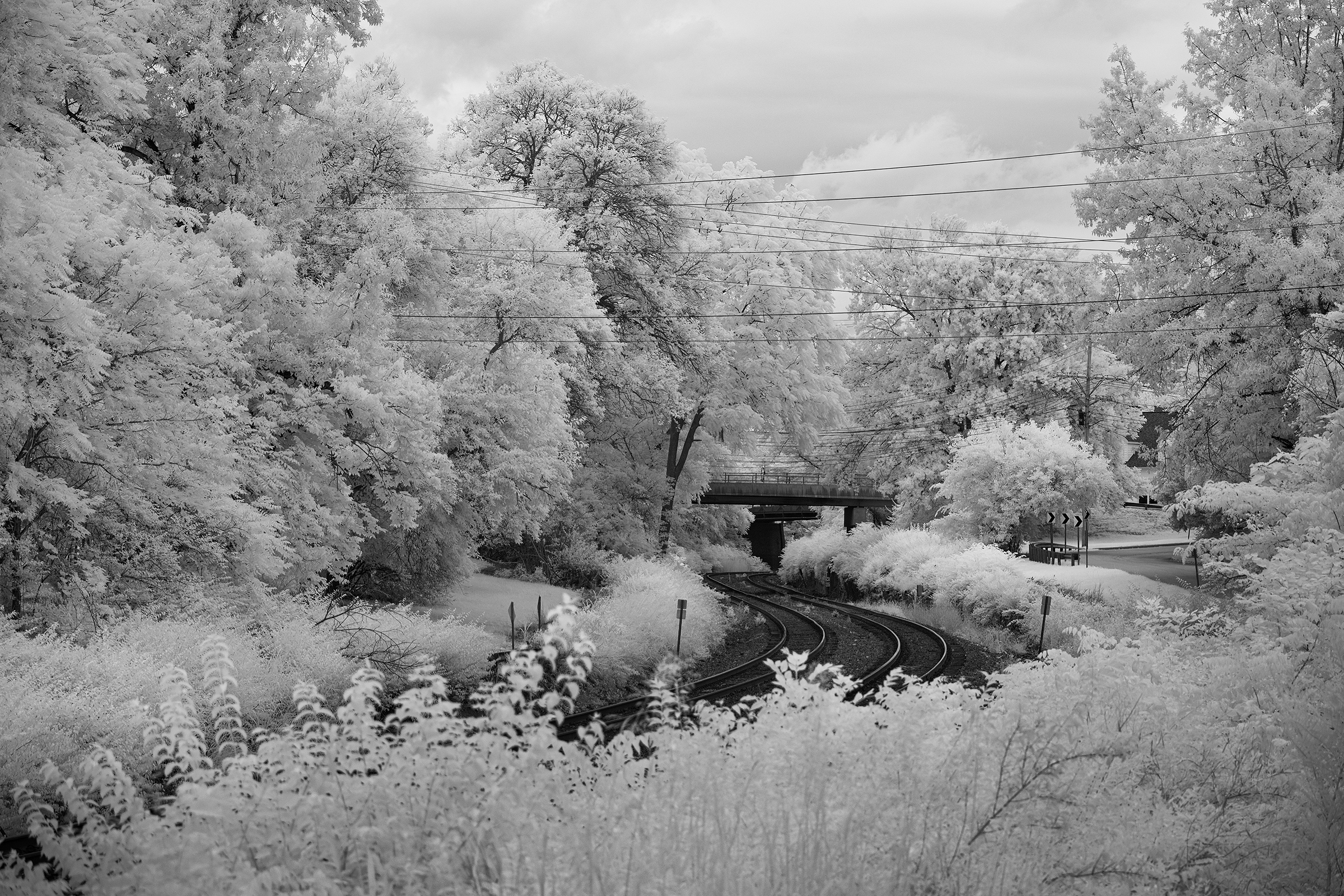
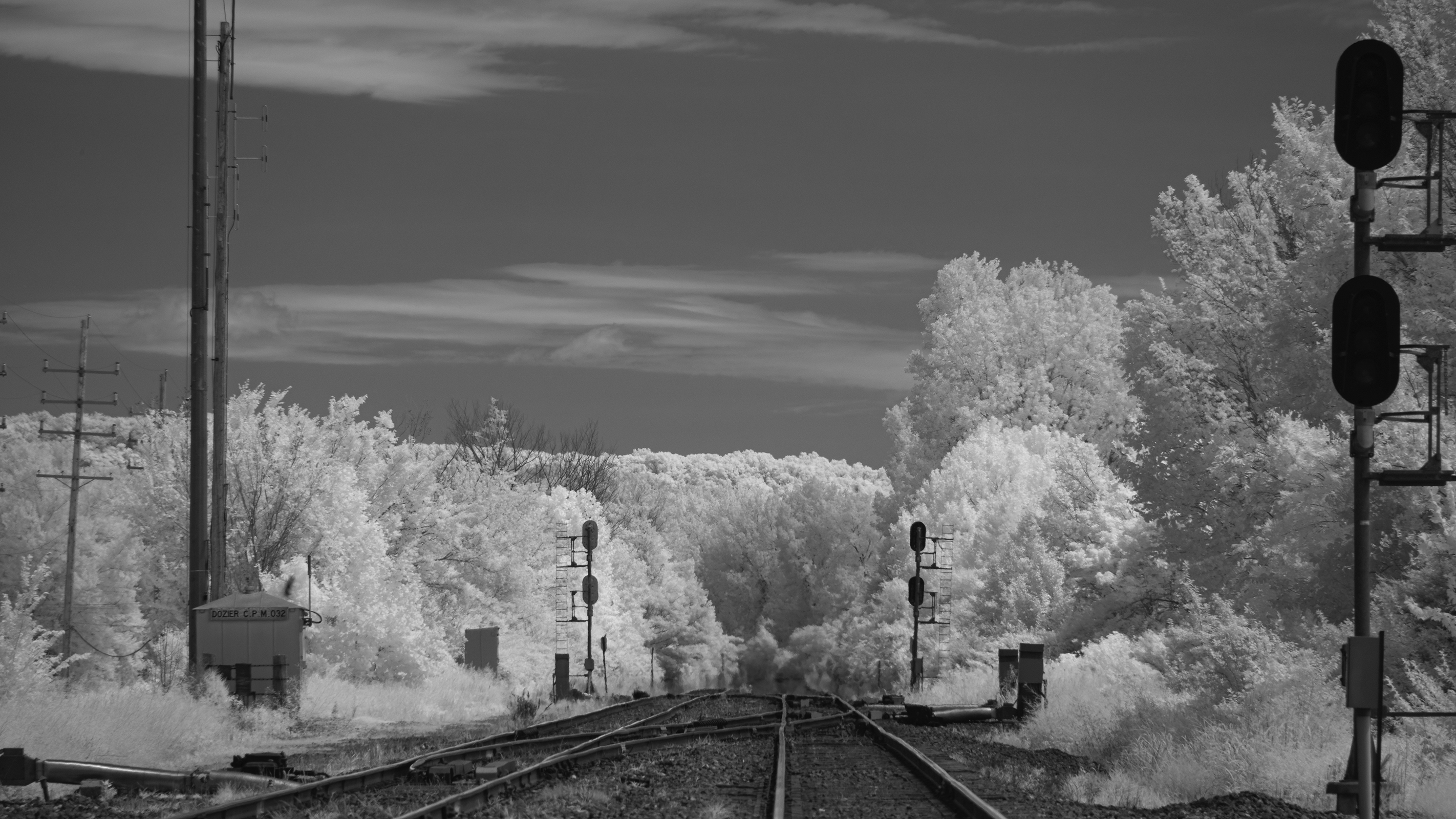
Train Spotting chase has been a fun couple of weekends of driving, driving, stop and check out locations then, driving, driving… I’ve checked out 14 locations on the Missouri side while a friend checked out some locations in Illinois from Springfield into St. Louis. I did St. Louis to Jefferson City. I want to have interesting shots, some with curves, some straight, some where we can hopefully be driving next to the train and capture some motion blur. With time to drive, possible crowd issues, and unforeseen events, I have picked these spots as my favorites. The other shooters who are going on this trip will put in their picks and we will come up with a final set of locations. These are all shot with the 850nm filter so I thought I would add them in here. These are my favorites.
Finally, I hit the lotus pond at Tower Grove Park. This park has a lot to offer (from the ruins where wedding and graduate/senior photographer shoot at) to the 11 Victorian-era pavilions. The lotus bloom every June and I love shooting these. The Missouri Botanical Garden right down the street also has a nice lotus pond but here you can walk all around for different lighting and angles, plus no one hassles you if you want to use a tripod.
The great thing about getting out either early morning or late afternoon is the opportunity for side light contrast. The drawback is there is less IR light than at noon. These are all shot between iso 800-2500.
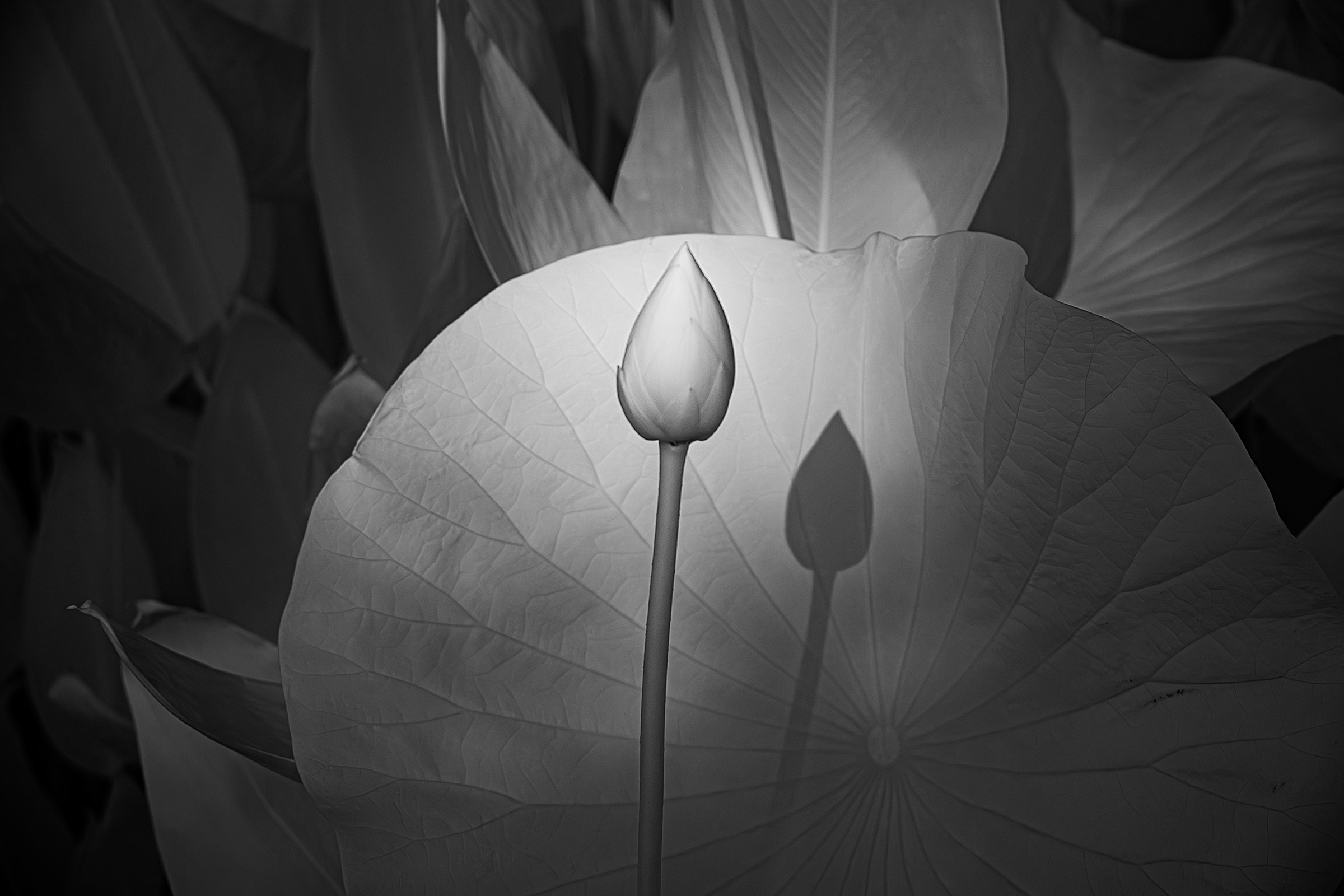
It’s always fun to find a hero or individual flower standing out. With the light filtering through trees at an afternoon lower level (around5pm) I found this wonderful shaft of light hitting a lone bud.
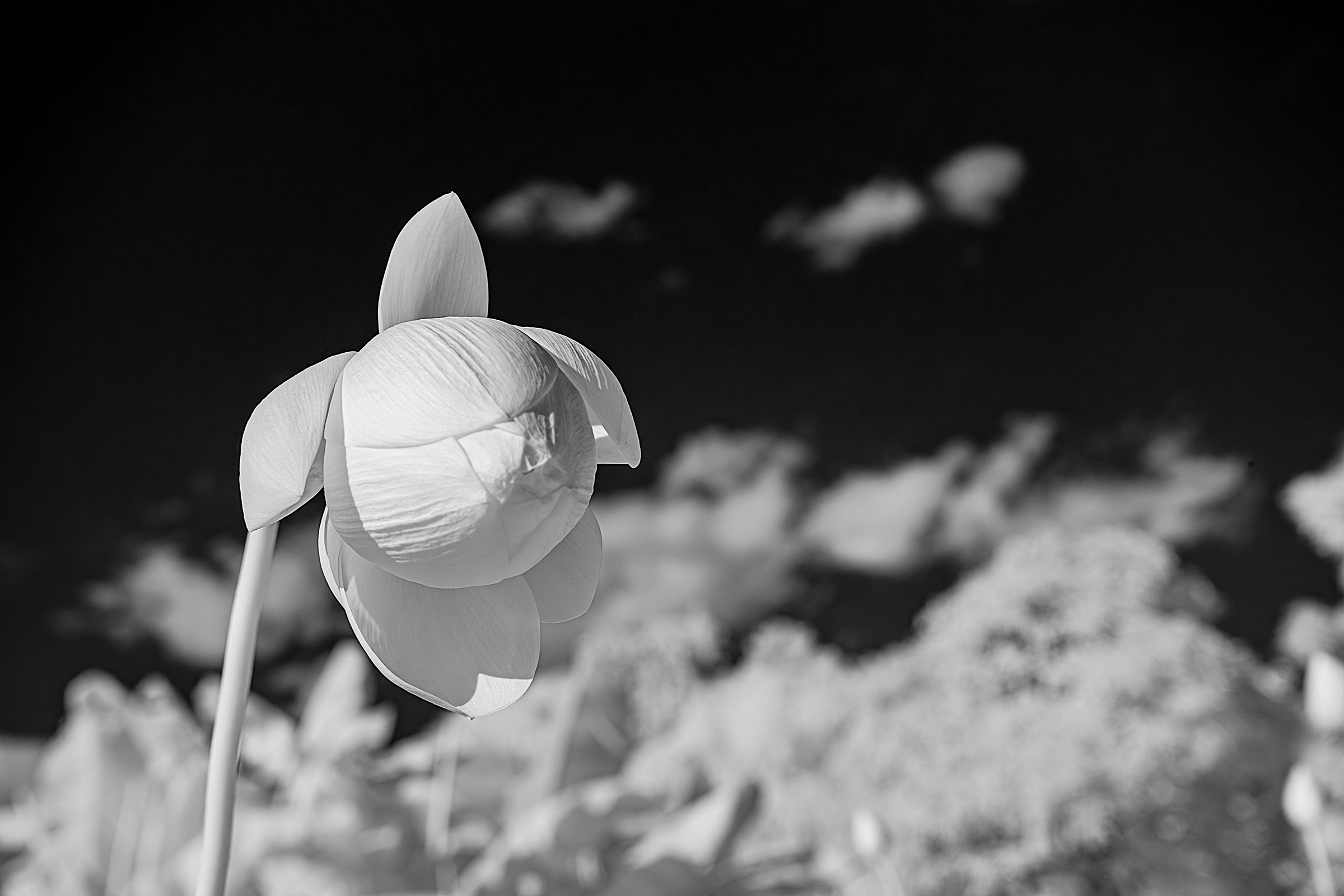
Shooting white flowers can be a real challenge to separate them from the background. Normally you would push the greens darker when you convert a normal color image into a B&W one. This is the exact opposite for IR. The greens go white, so you need to play more with shadows, or like the first image, use the dark sky as your background.
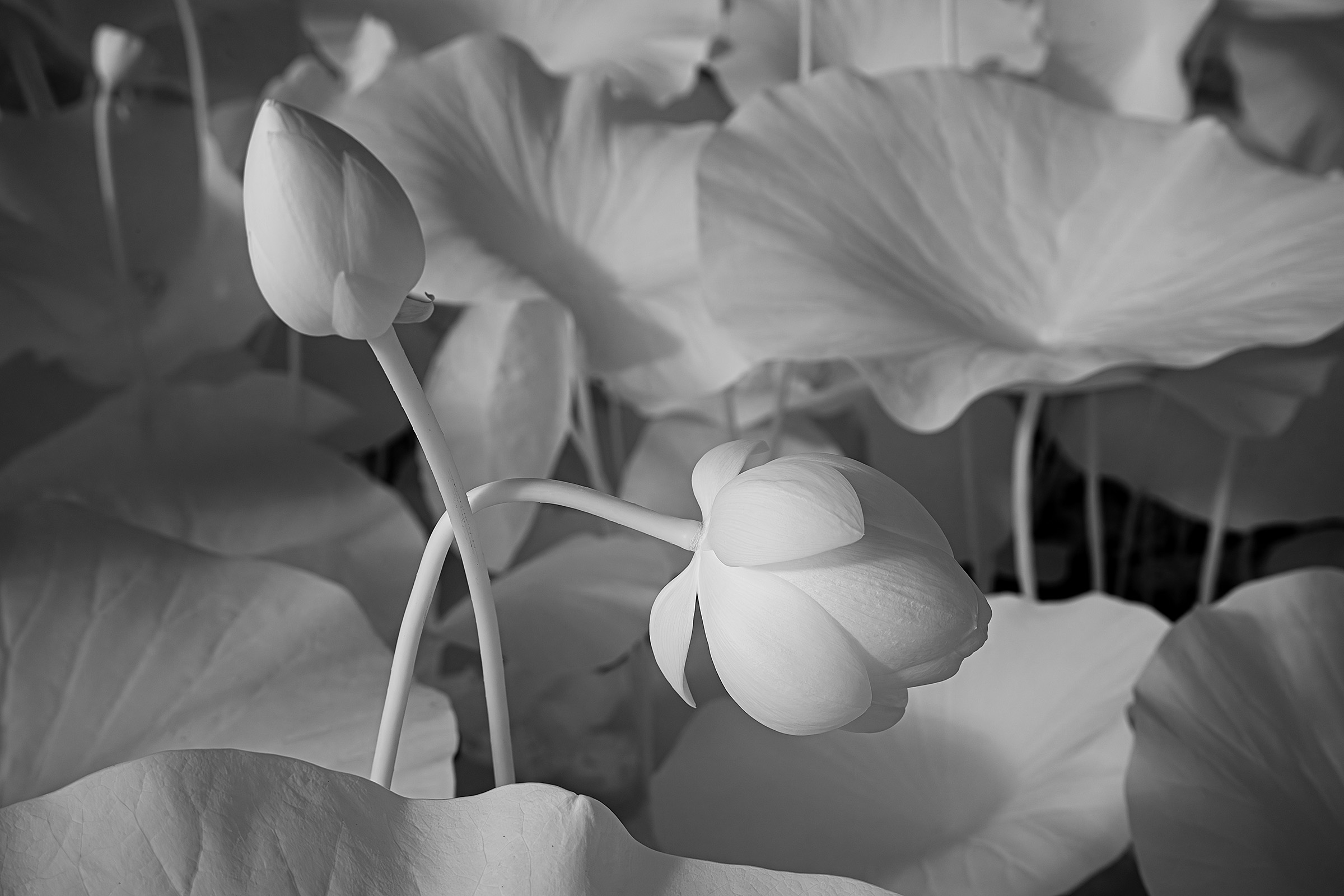
It was still early in the season, and none had totally opened yet, so you make do with what you have. I’m hoping the weather will be good this weekend so I can hit these flowers again with most being totally open, in full bloom.
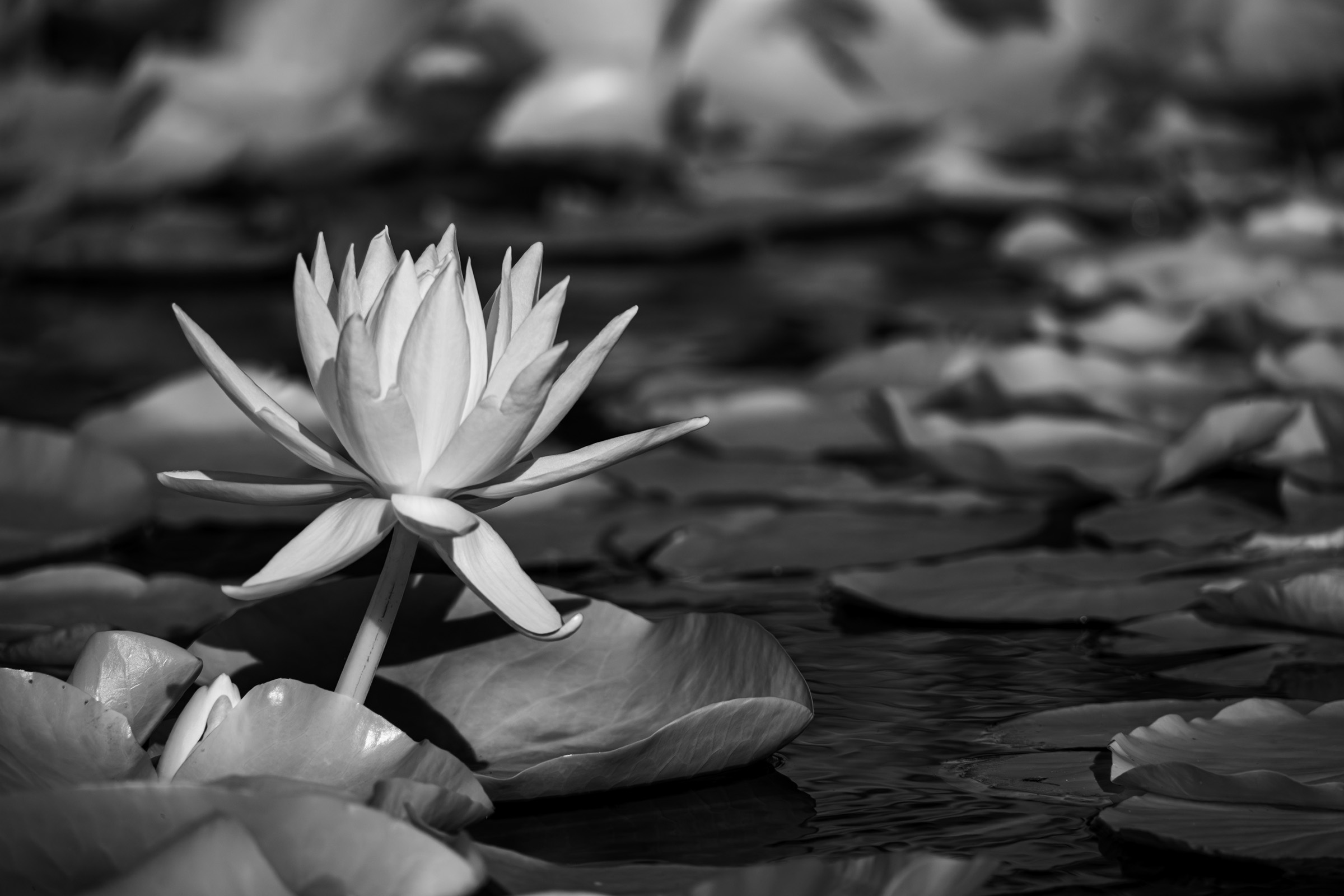
There is also a very nice water lily pond at Tower Grove Park where the flowers have totally opened. Like with the sky, you can often get water to turn almost pure black helping to add that IR punch and make your subjects jump off the page.
I still shoot some IR film, but I prefer using 120 IF film and currently my medium format camera is sick and needs to see the doctor. Using the digital camera takes away the issues with focus and exposure you have with film. I do not have, nor do I know of, a light meter that is accurate when measuring IR light, and you must shift your focus without being able to check your focus. Both issues you don’t have with digital, you see the exposure and focus via the electric view finder or real LCD (I’m talking mirrorless here,with a DSLR, you need to just review for exposure).
I hope this gave you some insight into shooting with an IR converted digital camera.